Amazing Animalia
Who doesn't love animals to some degree? We're not counting angsty adolescent
boys—they'll grow out of it. The correct answer is nobody. Many ancient civilizations
have worshiped different kinds of animals, and a good amount of modern ones too; a large portion
of fairy- and folktales center around animals or half animals. This might be because we can't
escape them completely, no matter what we try, and so we might as well welcome them into our lives.
It might be because they remind us of the unexplored wilderness and the places man can't go,
which appeals to our curious nature. Or it might be that we see something of ourselves in animals,
and so want to understand them as a method of learning more about ourselves. Or, of course, it could
be all three. Either way, let’s indulge that instinct for a while.
Aquatic Creatures
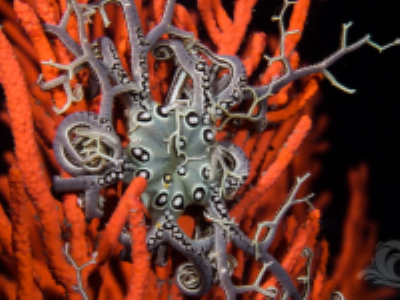
Basket Star
This is not a type of starfish, as you might expect.
A basket star is actually in the family Euryalidae.
They can be up to 70 cm in length with a disk diameter
of 14 cm. Many of them live deep in deep sea habitats
or cold water, but some live in shallow tropical reefs.
They can live up to 35 years in the wild.
Close
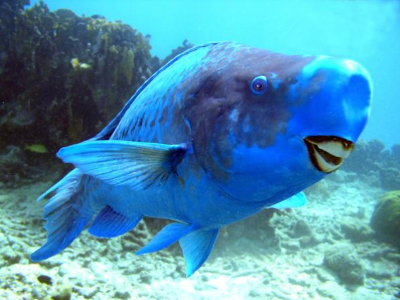
Blue Parrotfish
A member of the parrotfish genus Scarus. Found on coral
reefs in shallow water in the tropical and subtropical parts of
the western Atlantic Ocean and the Caribbean Sea. They usually
forage in a group of 500 individuals for spawning and deterring
predators while feeding. The males are a vivid blue color in
order to deter predators and attract mates.
Close
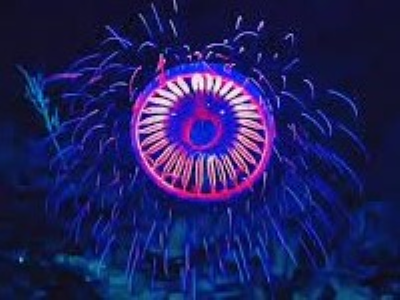
Firework Jellyfish
The firework jellyfish can be as small as 1 inch or as large
as 1 foot across. Their neon pink and gold tentacles look like
fireworks when light is shone on them. The firework jellyfish
has largely been found in the Pacific, Indian, and South Atlantic oceans.
Close
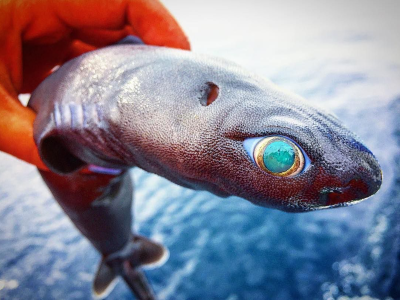
Kitefin Shark
The kitefin shark can grow up to 6 feet, though most are
around 4 feet long. The largest luminous vertebrate on record,
they have a soft glow due to the hormone melatonin. They have
large eyes made for seeing in low light conditions.
Close
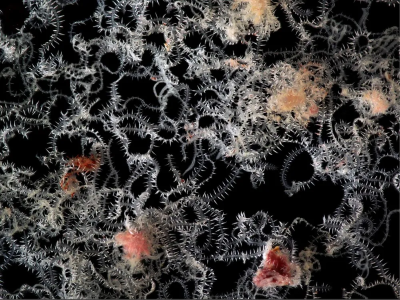
Ramisyllis Multicaudata
Ramisyllis multicaudata is a species of polychaete worm in
the family Syllidae. They have 1 head, and hundreds of rear
ends. They are relatively small, ranging from half an inch
to one and a half inches in length. when placed linearly,
all branches together could reach up to 30 meters.
Close
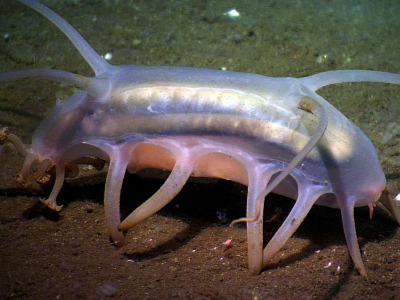
Sea Pig
A sea pig is a type of sea cucumber that lives in the deepest and
coldest part of the ocean, as far as four miles from the surface.
They grow to be 4-6 inches in length and their skin contains a toxic
chemical called holothurin, which is poisonous to other creatures.
Close
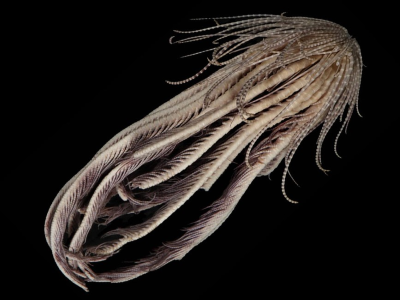
Strawberry Starfeather
The Antarctic strawberry feather star is a deep-sea invertebrate
with a strawberry-like body and 20 arms. Its arms are feathery and
can be up to 8 inches long. Basically picture the face hugger from aliens.
Close
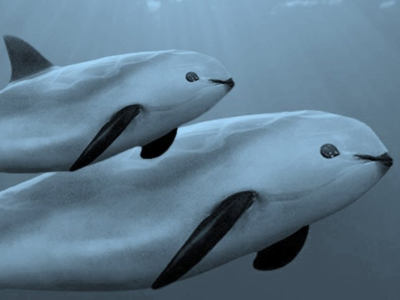
Vaquita
A species of porpoise that reaches a maximum body length of 150 cm (4.9 ft).
The vaquita is currently the most severely endangered animal in the world,
with there being less than 10 left in 2025.
Close
Furry Beasts
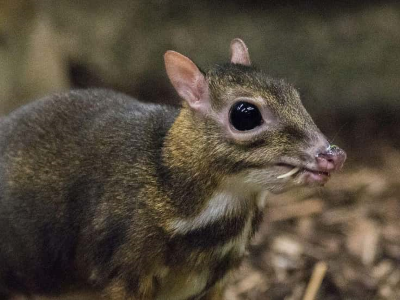
Chevrotain
Also known as a mouse deer. They are solitary or live in loose groups or pairs,
and feed almost exclusively on plants. Chevrotains are the smallest hoofed mammal
in the world, with an average length of 45 cm and an average height of 30 cm.
Close
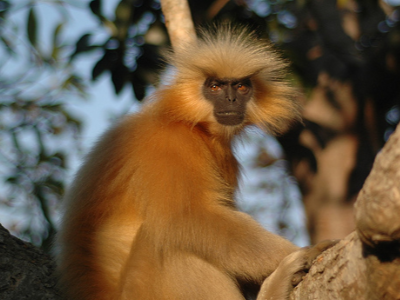
Gee's Golden Langur
Living in high trees with a herbivorous diet,
the average group size is eight individuals.
The golden langur is one of the most endangered
primate species of India and Bhutan. The length
of the body ranges from 20-30 inches, while the
tail is 28-39 inches in length.
Close
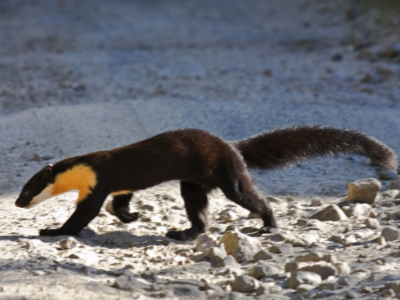
Nilgiri Marten
The nilgiri marten is about 22–26 inches long from head to vent,
with a tail of 16–18 inches, and weighs about 4.6 lb. They mainly
inhabit the Shola grasslands and southwestern Ghats montane rain
forests. They feed on small mammals and large insects.
Close
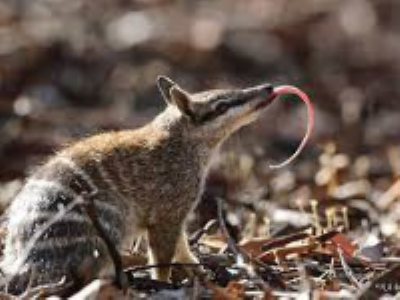
Numbat
An Australian mammal that feeds almost exclusively
on termites. Numbats are naturally found only in areas
with eucalyptus forests. There are estimated to be
fewer than 1,000 individuals left in the wild.
Close
Birds
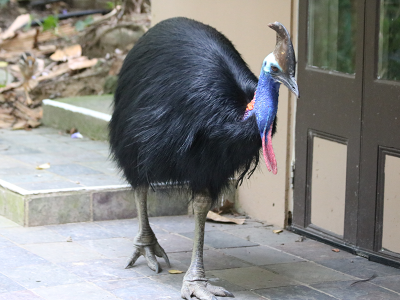
Cassowary
A flightless bird native to the tropical forests of New Guinea.
They are very wary of humans and are capable of inflicting serious,
even fatal injuries. They can reach 2 meters in height and almost
200 pounds in weight, making them the third tallest and second
heaviest living bird.
Close
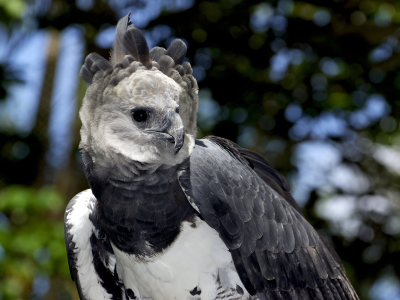
Harpy Eagle
With a height of four feet and a wingspan of seven feet,
harpy eagles live in the jungles of South America. They
have a diet of small to medium mammals, which they carry
to their nest in treetops to eat. You can identify the
nesting tree of a harpy eagle by the scattered bones at
the bottom.
Close
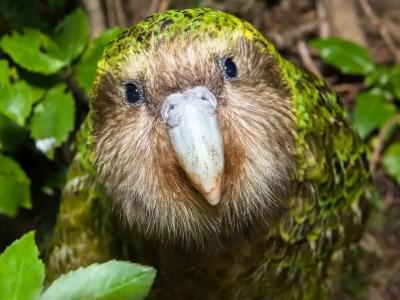
Kakapo
The kakapo, also known as the owl parrot or owl-faced parrot,
is a species of large, nocturnal, ground-dwelling parrot native
to New Zealand. They can grow to be about two feet long and are
the world's heaviest parrot. They are also one of the longest
living birds, with a lifespan of up to 100 years.
Close
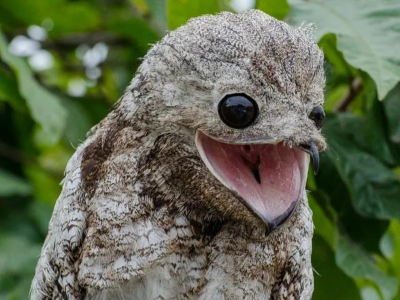
Potoo
Potoos are sometimes called poor-me-ones, after their haunting calls.
They nest on top of tree stumps, blending into the bark. Their single
egg is laid directly on top of the stump. They live mainly in humid
forests in the Americas, though some sub-species can live in dry
forests as well.
Close